Water
taxiing and Docking
Before approaching any type of base, it should be looked over thoroughly by the pilot before he gets in close enough to be hampered by obstructions. The direction of the wind and tide or current, if any, should be studied and the probable effect determined. Be alert for floating debris. While circling, plan your approach to the dock, ramp, float or beach
below.
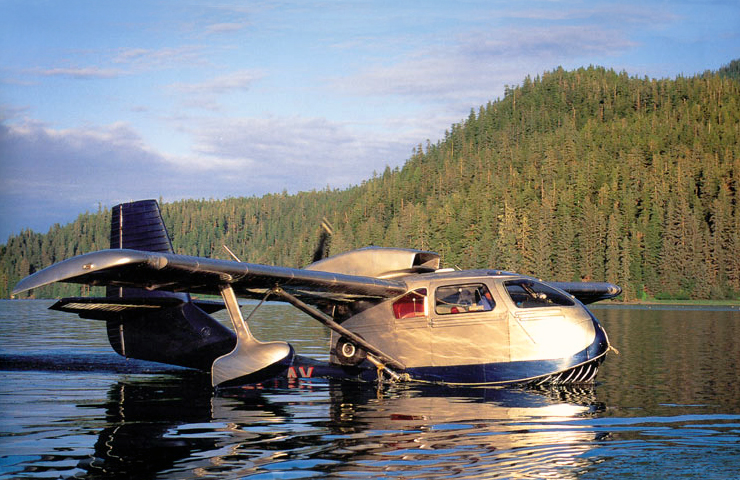
A good Seabee sailor knows that if left to its own devices the Seabee will always weathercock and point into the wind. It can always be turned into the wind without difficulty.
It is important to remember that although the Seabee when let alone will point into the wind, it is highly probable that it will move with the tide if the latter has appreciable velocity. In general, a current of 6
m.p.h. will more than offset a wind of 30 mph.
In determining wind direction look for wind streaks and remember that seagulls and ducks land into the wind, and the foam or spray from whitecaps appears to move back into the wind.
Get in the habit of visually checking your retracted wheels at least twice during your approach and let down to a water landing.
The power stall landing is the only safe landing technique to use when landing the Seabee on glassy water. The power stall landing is also the best technique to use in landing on rough water or when landing at night. Level off your Seabee from 50 to 100 feet above the water and adjust power to maintain 65 IAS with flaps down. This combination will ensure a nose-high attitude and a gradual rate of descent. Allow the airplane to land itself using a slight amount of back pressure on the control wheel. Practice the technique of the power stall landing under normal water conditions until you become an expert.
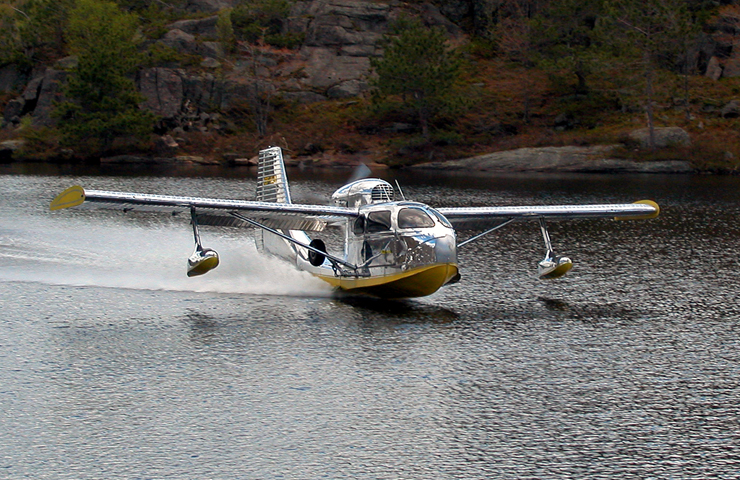
The water rudder is most effective at slow speed - slightly above idling- because it is then working in undisturbed water.
In making a downwind turn in a stiff breeze, it may be found that the water rudder does not give sufficient control to force the ship out of the wind at idling speed. This is due to two causes. The first and most obvious is that the ship has a much stronger tendency to weathercock or point into the wind. The second is that the force of the wind may partly or completely offset the push of the propeller, so that the ship has little or no forward speed. When the strength of the wind is such that the ship cannot be turned downwind at idling speed, the wheel should be held back, full rudder applied and the throttle opened enough to bring the nose up. This will put your water rudder down deeper into the water and it will have greater effect. This factor plus power will bring your Seabee around.
If the wind is of sufficient strength to render control of the ship difficult, the approach to any ramp should be either directly downwind or directly into the wind making due allowance for tide and current if any exists.
If possible, the approach to a raft or float should always be made into the wind for more complete control.
Always check the operation of your reversible prop before getting close to a dock.
When beaching your Seabee, if there is any doubt about the solidity of the beach, the wheels should be left up and the ship brought in on the keel.
Remember the tides when beaching your Seabee:
-
If the tide is low when your Seabee is beached remember the water will be coming in and you may have to get your feet wet to get to it later.
-
If the tide is high when your Seabee is beached, remember the water will be going out and your Seabee may be left high and dry.
Approach to a beach with wheels down should be made at an angle.
-
This prevents both wheels from getting stuck if the beach is soft.
-
This keeps one wheel in the water and usually off the bottom,
thereby making it easier to back off the beach.
Descent from a ramp of more than 15º should be made backwards. Put the prop in reverse and slowly back your Seabee down the ramp. This will prevent damage to your water rudder.
When approaching a dock or float solo, the following procedure should
be followed:
-
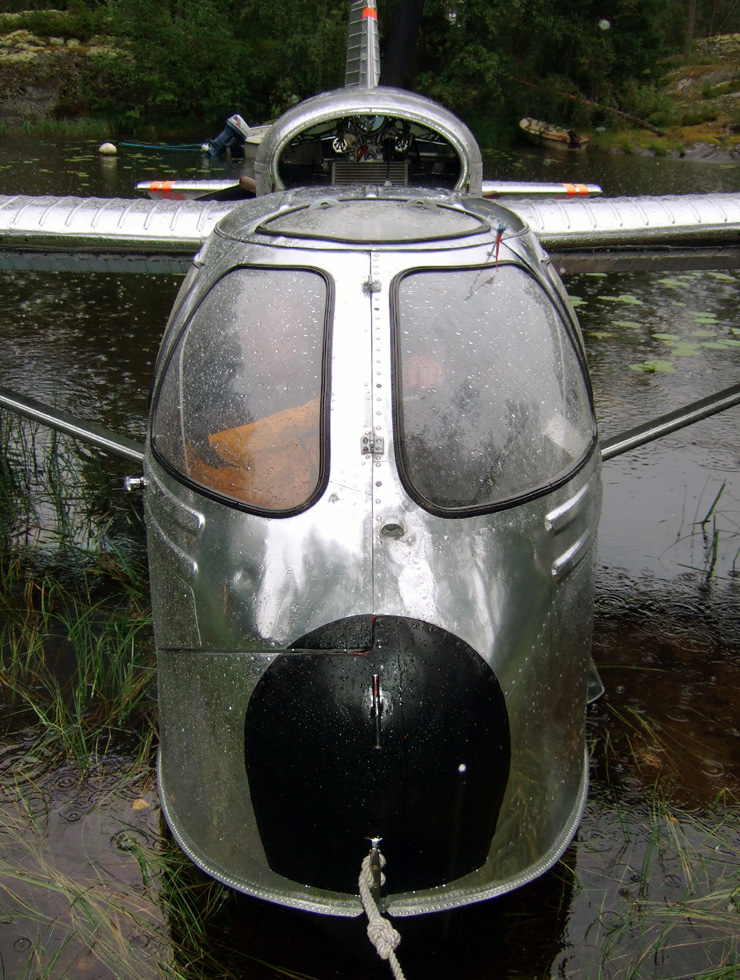
Open and secure the bow door.
-
Remove and secure right hand control wheel.
-
Sitting in the right hand seat, set throttle at about 1000 rpm and
use (only) the reverse prop control and rudders during approach.
The following procedure should be used when anchoring the Seabee:
-
Remove and secure right hand control wheel.
-
Let out anchor until it hits bottom – hold Seabee stationary with
reverse prop control.
-
Secure line to bow cleat and secure excess line to rudder bar.
-
Slowly back away until you’re certain that your anchor will hold,
then stop cut your engine.
-
This will make certain that your anchor is not dragging and your Seabee is not drifting from position.